Over the centuries, land surveying has progressed from simple chain-and-compass measurements to sophisticated, technology-driven approaches. Today, the industry stands at the cusp of a new era, where digital tools and automation are redefining the accuracy and efficiency of land measurement and mapping. Rapid technological advancements have particularly reshaped the capabilities available to modern professionals, enabling more comprehensive and precise project outcomes. For organizations or property owners seeking reliable expertise, leveraging land surveying services Manhattan NY, is a crucial step in ensuring project success.
These new technologies not only help achieve greater precision but also enable tackling projects that were previously considered too complex or inaccessible. The latest innovations—ranging from flying drones to advanced artificial intelligence—are not just convenient; they are fundamentally changing the entire landscape of surveying work. As more industry leaders realize the potential of data-driven insights and automated data collection, the competitive edge becomes not just about skill, but adaptation to these technological trends.
Alongside traditional expertise, the embrace of digital tools enables surveyors to offer faster turnaround times, enhanced safety, and better cost management. Translating intricate terrain features or large swathes of land into digital maps is no longer a multi-week undertaking—it can happen in days with the right instruments at hand. Whether in urban development, infrastructure planning, or environmental monitoring, the impact of this evolution is profound.
Staying at the forefront of industry innovation means continually assessing new methods and integrating those that add tangible value to projects. As technology advances, so too must the strategies and tools that surveyors rely upon. This article delves into the specific innovations transforming the surveying sector and highlights why staying updated is more vital than ever.
The Role of Drones in Surveying
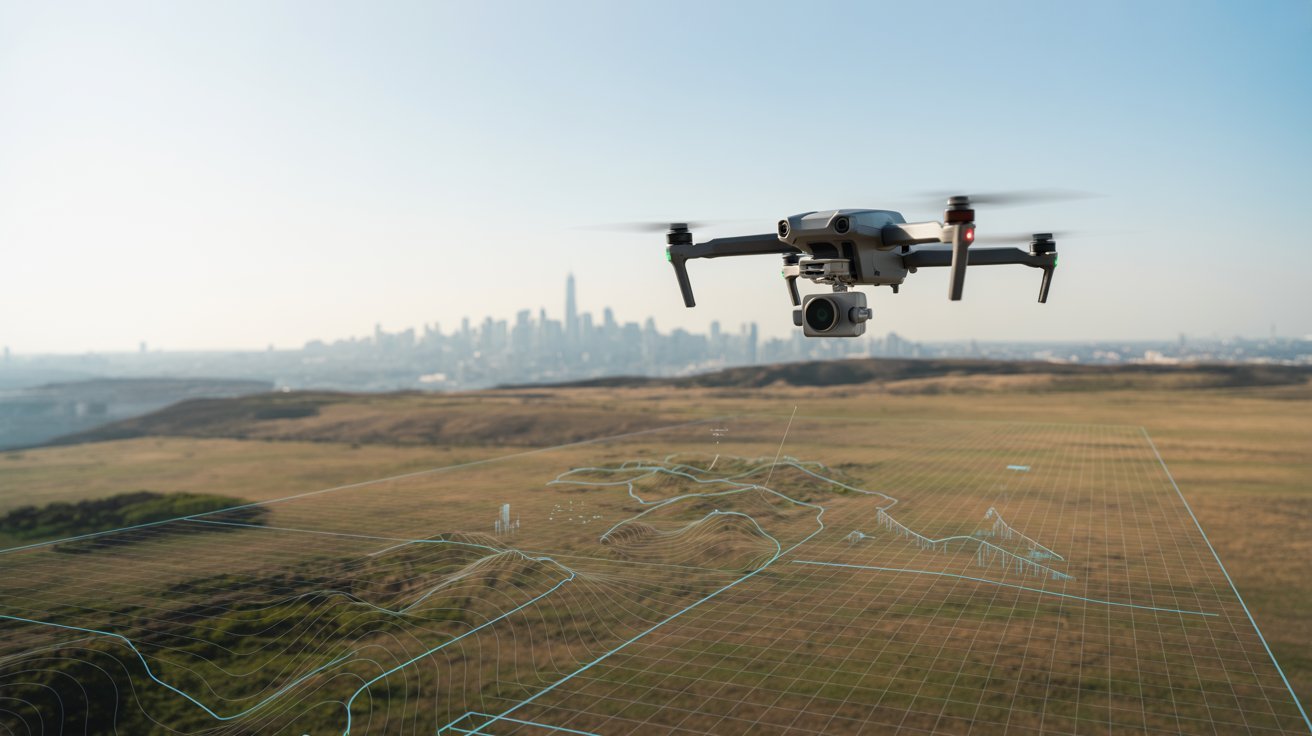
Drones, also known as UAVs (Unmanned Aerial Vehicles), have marked a seismic shift in how land surveys are conducted. By providing rapid, aerial overviews of large or difficult-to-navigate sites, drones are now a staple tool in the professional surveyor’s kit. Their onboard cameras and sensors enable high-resolution imagery and topographical data collection, reaching locations that might be hazardous or time-consuming for traditional ground teams.
The major advantages of drones include heightened speed, reduced labor costs, and the ability to collect comprehensive data in a fraction of the time. For instance, on a recent infrastructure project in New York City, drones helped survey an entire urban block within hours—something that previously would have required weeks of manual labor. The digital models produced enabled stakeholders to make faster, more informed decisions.
In regions with challenging terrain or restricted access, drones provide crucial oversight with minimal risk to survey crews. It not only enhances safety but also ensures that data is up-to-date and highly accurate, laying the foundation for successful planning and development.
LiDAR Technology: Enhancing Precision
LiDAR, or Light Detection and Ranging, is another transformative technology in land surveying. Unlike traditional methods that rely primarily on manual or optical measurements, LiDAR uses laser pulses to create detailed, three-dimensional representations of the Earth’s surface. Mounted on drones, vehicles, or stationary systems, LiDAR can map complex terrain with extraordinary accuracy.
One key advantage of LiDAR is its effectiveness in densely vegetated or obscured areas where visual inspection might fail. It can penetrate foliage, providing critical information for environmental studies or flood modeling. For example, in the aftermath of natural disasters, rapid response teams now often deploy LiDAR to assess land movement or destruction, enabling prompt, precise damage analysis. According to National Geographic, LiDAR has even been instrumental in uncovering hidden archaeological sites and monitoring the impacts of climate change.
Artificial Intelligence in Data Processing
The surge in data made possible by drones and LiDAR requires sophisticated analysis—and that’s where artificial intelligence (AI) comes into play. AI-powered algorithms can now process massive datasets far more quickly and accurately than human teams alone. Whether it’s filtering out irrelevant data points, identifying terrain features, or running complex predictive models, AI significantly reduces human error and accelerates project timelines.
In land development planning, AI can assimilate historical data, current site conditions, and predictive analytics to inform smarter, safer, and more sustainable design choices. The reduction in manual labor not only cuts costs but ensures decision-makers have access to real-time, actionable insights throughout the entire lifecycle of their projects. Recent industry findings featured by Forbes underscore how AI-driven decision-making is redefining the construction and land management sectors.
Integration of Technologies for Comprehensive Solutions
The greatest potential for innovation arises when these powerful tools—drones, LiDAR, and AI—are integrated. Together, they offer a holistic solution that tackles the most complex surveying challenges. For instance, during a recent transportation network overhaul, drones first collected aerial LiDAR scans, and AI then processed the massive amounts of data to identify optimal construction zones and potential risks. This seamless integration reduced planning time by over half and delivered more comprehensive results than any single technology could achieve in isolation.
Integrated solutions not only enhance accuracy but also streamline team collaboration, reduce redundancies, and enable truly data-driven project management. As project complexity increases, the ability to leverage multiple, interoperable technologies becomes essential for success.
Challenges and Considerations
Embracing new technologies can present a steep learning curve for organizations accustomed to legacy systems. Ongoing training, updated certifications, and a willingness to experiment with new tools are crucial for smooth adoption. Cost is another major consideration—initial investments in high-end drones, LiDAR systems, and AI platforms can be significant. However, the long-term return on investment typically justifies the upfront expense by enabling shorter project timelines, improved safety, and higher-quality outputs.
Staying abreast of these rapidly evolving solutions requires a commitment to continual professional development. The most successful operations are those prepared to grow in tandem with technological progress, remaining nimble as new opportunities and challenges emerge.
Future Trends in Land Surveying
As we look ahead, innovations such as real-time satellite mapping, augmented reality overlays, and even greater automation are poised to revolutionize the industry further. These advancements promise not just incremental improvements but transformative shifts in how land assets are managed and optimized.
The commitment to continuous learning and adaptation is the thread that will connect successful surveying firms of the future. Professionals who remain open to emerging methodologies and are tireless in their pursuit of accuracy, efficiency, and sustainability will be ready for the opportunities and challenges yet to come.
Conclusion
The integration of cutting-edge technologies like drones, LiDAR, and artificial intelligence signals a new era for the land surveying profession. From enhanced precision to faster data collection and smarter analytics, these tools have transformed what is possible in both urban and remote environments. As the pace of progress accelerates, the imperative for industry professionals is to remain adaptive and proactive—learning, evolving, and ultimately shaping the future of their field.
Embracing these advancements is not just about staying competitive; it’s about setting the standard for safer, smarter, and more successful project outcomes in the rapidly changing landscape of land surveying.
Do Read: Top Projects You Can Build with an Arduino Starter Kit